Four core high-voltage testing instruments empower the intelligent upgrade of power grid operation and maintenance
Against the backdrop of the accelerated development of new power systems, the safety inspection and operational efficiency of power equipment have become critical to ensuring the stable operation of the grid. Among these, insulation resistance testers, grounding resistance testers, digital dual-clamp voltmeters, and digital triple-clamp phase voltmeters serve as the "four fundamental tools" in high-voltage power testing. With their advantages of precise measurement and user-friendly operation, they act as "reliable assistants" for power maintenance personnel, safeguarding the safety of the entire process from grid construction to daily operations.
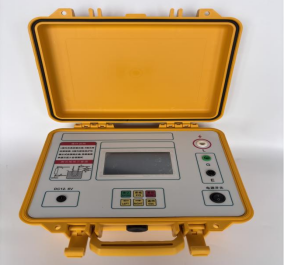
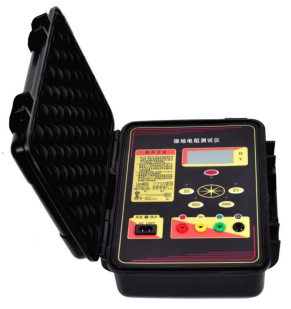
The grounding resistance tester has abandoned the traditional manual hand-cranking power generation method and adopted advanced medium and large-scale integrated circuits. Utilizing DC/AC conversion technology, it combines three-terminal and four-terminal testing methods into a single model, making it a new type of grounding resistance testing instrument. The working principle involves the internal DC/AC converter transforming direct current into low-frequency alternating current, which forms a circuit with the auxiliary grounding electrode C and the test object E. An alternating voltage drop is generated on the test object, which is then sent to the AC amplifier via the auxiliary grounding electrode P, amplified, and finally detected and displayed on the meter head. With the aid of a range switch, three different measurement ranges can be obtained: 0~2Ω, 0~20Ω, and 0~200Ω.
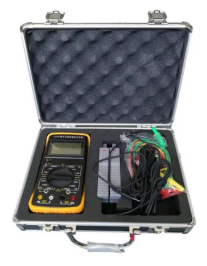
This instrument is a high-precision, low-cost, handheld, dual-channel input measurement device specifically designed for on-site voltage, current, and phase measurement. It enables convenient on-site measurement of phase angles between U-U, I-I, and U-I, as well as the determination of inductive and capacitive circuits, three-phase voltage phase sequences, transformer wiring groups, secondary circuits and busbar differential protection systems, reading phase relationships between CTs in differential protection, and verifying the correctness of meter connections. The measured current is input via a clamp-on current transformer, eliminating the need to disconnect the circuit during measurement.
Currently, with the large-scale implementation of ultra-high voltage power grids and new energy projects, the market demand for the four core instruments continues to rise. Domestic equipment, with the advantages of fast technological iteration and high cost-effectiveness, has achieved independent and controllable core technology, comparable to imported products in accuracy and stability, and has a market share exceeding 80%. In the future, these instruments will further integrate technologies such as AI diagnosis and the Internet of Things to achieve the integration of "detection analysis warning", injecting stronger power into the safe and efficient operation of the new power system.